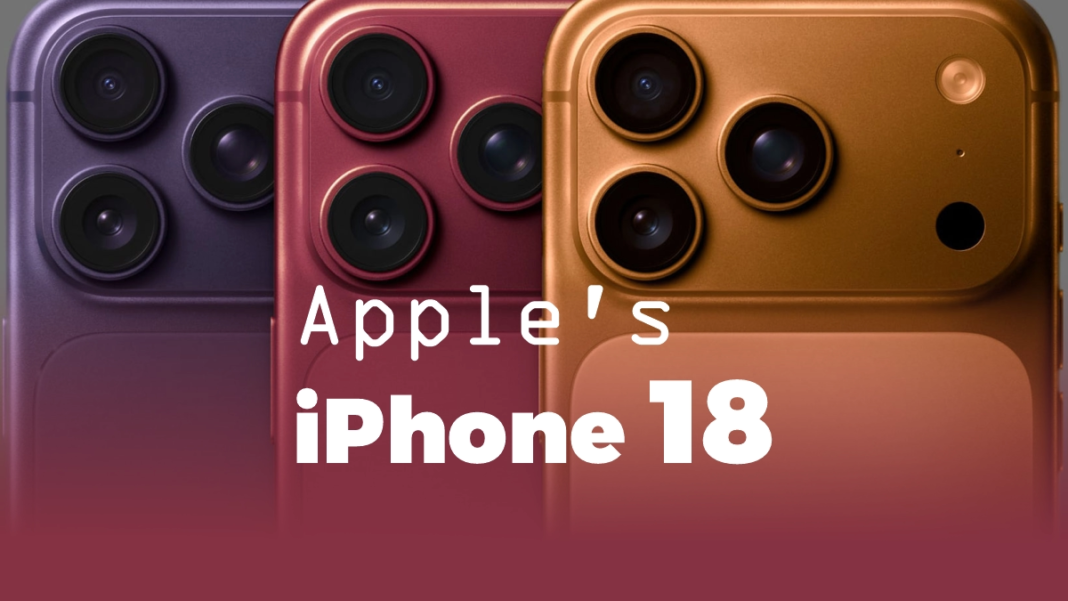

If you’ve been holding out for a bold iPhone redesign, Apple’s iPhone 18 might be exactly what you’re waiting for-just not necessarily when you expect it. Credible supply‑chain reporting points to a two‑phase launch that prioritizes Pro models in September 2026 and delays the standard iPhone 18 to spring 2027. That staggered schedule appears to clear a runway for marquee features like under‑display Face ID and Apple’s first 2nm A20 chips, signaling a real design pivot rather than another annual tweak. [macrumors.com], [macworld.com]
The rollout rethink: why the standard iPhone 18 may arrive later
Multiple well‑sourced reports indicate Apple will split the iPhone 18 launch, shipping iPhone 18 Pro/Pro Max in fall 2026 alongside a much‑rumored foldable iPhone, while the base iPhone 18 lands in early 2027. The logic: fewer internal collisions in a lineup that now spans Air, e‑models, Pro, and legacy devices, plus operational benefits from smoothing production and revenue across quarters. [macrumors.com], [macrumors.com]
Analysts and industry outlets outline how a staggered release helps Apple manage advanced components (think next‑gen displays and chip nodes) while making room for the foldable’s high‑end positioning. This cadence could also extend each model’s spotlight window, rather than crowding all news into September. [financialexpress.com], [timesnownews.com]
Takeaway: If your heart is set on the standard iPhone 18, the prudent expectation is early 2027-but if you want the big design leaps, 2026’s iPhone 18 Pro models look like the primary stage. [macrumors.com]
The design story: under‑display Face ID and a leaner front
The most visible change rumored for Apple’s iPhone 18 Pro is under‑display Face ID, shrinking (or even retiring) the Dynamic Island into a minimal punch‑hole for the selfie camera-often described at the top‑left of the screen. Display analyst Ross Young and other sources have long sketched this roadmap, and recent 2026‑dated reports align on timing for the Pro line. [macrumors.com], [9to5mac.com], [macrumors.com]
Engineering‑focused coverage explains why this is hard: Apple must route IR light through active OLED pixels without degrading accuracy or latency. Prototypes reportedly employ metalenses and sub‑pixel patterns to ensure the dot projector and IR sensors work invisibly beneath the panel-preserving Face ID’s reliability while reclaiming screen real estate. [apple.gadg…thacks.com]
Expect the broader silhouette to remain close to iPhone 17 Pro (sizes around 6.3 in. and 6.9 in.). But a cleaner front, potentially thicker Max chassis (to fit bigger batteries), and a refined MagSafe glass treatment have all been floated for the Pro refresh. [macworld.com], [macrumors.com]
Why this matters: An edge‑to‑edge look with fewer cutouts is the everyday design upgrade people notice instantly. If Apple lands under‑display biometrics without compromises, it’s the kind of forward step fans have been craving. [macrumors.com]
Inside the leap: A20 on TSMC’s 2nm (N2) process
Beyond aesthetics, Apple’s iPhone 18 story is about silicon. Repeated analyses say Apple has reserved over half of TSMC’s 2nm capacity for 2026, pointing to A20/A20 Pro chips built on the first volume GAAFET/N2 node. These should deliver major efficiency gains (double‑digit performance upticks or ~30% power savings at iso‑performance vs. 3nm), with Apple using the headroom for on‑device AI, sustained performance, and battery life. [dataconomy.com], [9to5mac.com], [techxplore.com]
Veteran analyst Ming‑Chi Kuo reiterated in 2025 that iPhone 18 models would run 2nm A20, with yields improving-making it likelier the technology reaches beyond Pro to the broader lineup when timing allows. Packaging rumors also point to WMCM (wafer‑level multi‑chip module) that integrates memory closer to the SoC blocks, further boosting efficiency and AI throughput. [investing.com], [macrumors.com]
Costs are non‑trivial-$30,000 per wafer is frequently cited for early N2, and BOM inflation across memory (DRAM/NAND) is a 2026 headwind. Still, Apple’s scale and long‑term supply deals position it to absorb more pain than peers, especially with premium ASPs. [wccftech.com], [9to5mac.com]
Bottom line: When A20 lands, expect a noticeable lift in efficiency per watt-exactly the kind of improvement that enables thinner designs, brighter screens, more camera compute, and longer battery life in real use. [techxplore.com]
The “big year” context: foldable, Siri upgrades, and market conditions
2026 isn’t only about Apple’s iPhone 18 Pro-it’s shaping up as a portfolio inflection year:
- Foldable iPhone (late 2026): TrendForce forecasts Apple’s entry with a book‑style device, estimating ~5.5″ outer / ~7.8″ inner displays and a crease‑minimizing hinge supply chain-potentially repositioned above Pro in pricing. Expect this debut to both lift foldable penetration and pull attention toward new form factors. [9to5mac.com], [trendforce.com]
- Siri 2.0 / Apple Intelligence updates: Coverage points to a spring iOS release that materially upgrades Siri’s screen awareness and context handling, followed by further AI improvements later in 2026. That dovetails neatly with A20’s on‑device capabilities. [tomsguide.com]
- Macro component pressure: Counterpoint Research expects global smartphone shipments to dip ~2% in 2026 due to memory cost spikes, but also notes Apple is among the best positioned to manage BOM increases without derailing its roadmap. [9to5mac.com], [benzinga.com]
If Apple indeed staggers iPhone 18 releases, it may be partly to optimize supply for bleeding‑edge components (2nm wafers, new displays) and give the foldable room to breathe at launch, before mainstream models refresh in early 2027. [macrumors.com]
Will Apple’s iPhone 18 be the “design refresh” fans want?
Fans typically mean two things by “refresh”: a cleaner front and meaningful new capabilities. On both counts, the iPhone 18 Pro case looks strong:
- Cleaner front: Under‑panel Face ID and a single camera hole deliver the closest‑yet approach to a “true all‑screen” feel—without compromising biometric speed or reliability. [macrumors.com], [apple.gadg…thacks.com]
- Performance foundation: A20 (2nm) moves Apple to the next transistor architecture, enabling more AI compute per watt and sustained performance for camera pipelines, graphics, and multitasking. [9to5mac.com], [techxplore.com]
- Battery and build tweaks: A slightly thicker Pro Max to house larger cells, plus materials refinements around MagSafe, suggest Apple is balancing sleekness with endurance—always welcome in daily use. [macrumors.com]
The rub: standard iPhone 18 buyers may need to wait until 2027 to touch these changes. If Apple gives the base model a more modest update cadence, the boldest design shifts could be Pro‑first. [macrumors.com]
People Also Asked (About Apple’s iPhone 18)
Q1: Will Apple’s iPhone 18 really launch in 2026?
Yes-iPhone 18 Pro/Pro Max are expected in September 2026, but several reports say the standard iPhone 18 is scheduled for early 2027, marking a split release strategy. [tomsguide.com], [macrumors.com]
Q2: Is Apple’s iPhone 18 getting under‑display Face ID?
The strongest rumor stack points to under‑panel Face ID on iPhone 18 Pro, with a small punch‑hole selfie camera replacing the Dynamic Island. Timing aligns with 2026. [macrumors.com]
Q3: What chip will Apple’s iPhone 18 use?
Analysts expect A20 built on TSMC’s 2nm (N2) process, with Apple securing a large share of early capacity and mass production starting in Q4 2025. [9to5mac.com], [techxplore.com]
Q4: How does Apple’s iPhone 18 fit into the foldable iPhone rumors?
The foldable is widely tipped for late 2026 as a premium device, while iPhone 18 Pro refreshes the slab design with under‑display biometrics. The base iPhone 18 likely follows in 2027. [9to5mac.com], [macrumors.com]
Q5: Should I wait for Apple’s iPhone 18 or buy iPhone 17?
If you want the cleaner front and 2nm performance, the iPhone 18 Pro looks worth the wait. If you prefer a standard model, factor in a probable 2027 release. [macworld.com], [macrumors.com]
Conclusion – What “refresh” really means for Apple’s iPhone 18
The signals from trusted 2025-2026 reporting are clear: Apple’s iPhone 18 Pro aims to deliver the two things fans have asked for-a more seamless display and meaningful efficiency gains-by pairing under‑display Face ID with 2nm silicon. The deliberate, two‑phase rollout suggests Apple is balancing ambition with supply realities while carving out spotlight space for a foldable. If you equate “refresh” with a front you don’t have to look around and performance that feels lighter yet stronger. The iPhone 18 Pro in 2026 fits the brief-and sets the stage for mainstream models to catch up in 2027. [macrumors.com], [9to5mac.com], [macrumors.com]
Sources (2025-2026, trusted & current)
- MacRumors reporting on staggered iPhone 18 timing and 2026 product roadmap, plus under‑display Face ID timeline. [macrumors.com], [macrumors.com], [macrumors.com]
- Tom’s Guide overview of 2026 iPhone plans and Siri updates. [tomsguide.com]
- 9to5Mac and TechXplore coverage of TSMC 2nm mass production and Apple’s capacity reservations. [9to5mac.com], [techxplore.com]
- Counterpoint Research (via Benzinga/9to5Mac) on 2026 shipment outlook and memory‑driven BOM pressure. [benzinga.com], [9to5mac.com]
- TrendForce market notes on foldable iPhone timing and component supply landscape. [trendforce.com], [9to5mac.com]
- Macworld deeper analysis of 2026 iPhone shifts and A20 packaging direction. [macworld.com], [macworld.com]
Notes for readers:
- The features and dates above are based on current reporting and analyst forecasts; Apple’s plans can change.