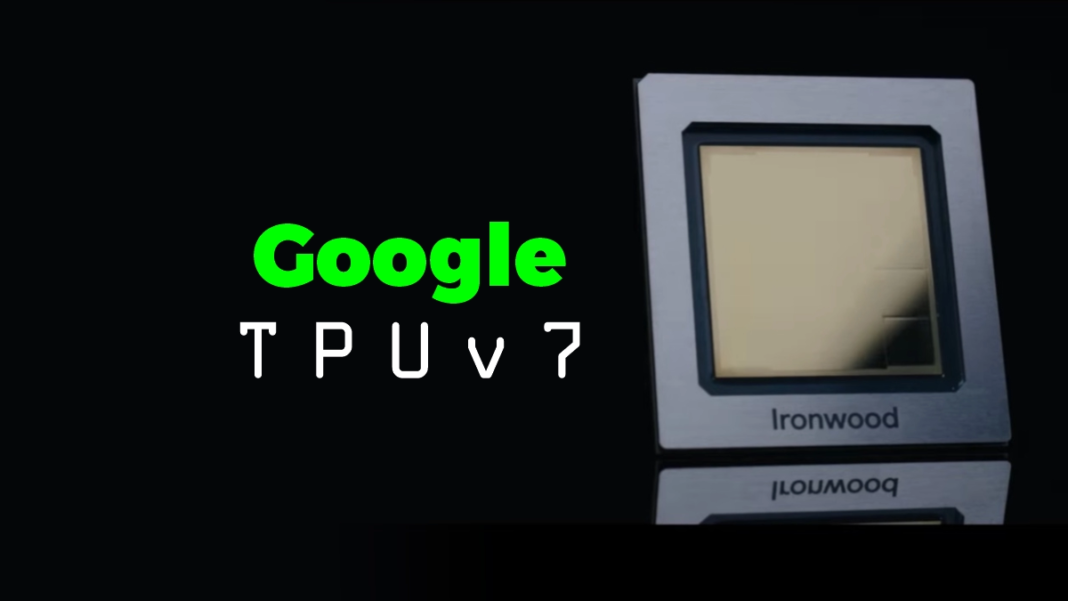

The AI Compute Clash: Why Google TPUv7 is Shaking NVIDIA’s Empire
The artificial intelligence revolution hinges on hardware. The war for compute dominance has intensified. For years, NVIDIA’s GPUs like the A100 and the mighty H100 reigned as the undisputed “King of AI.” They powered large models from OpenAI and numerous enterprise deployments. But a seismic shift is now underway. A formidable challenger, the Google TPUv7 (codenamed “Ironwood”), leads this change.
This new generation of Google’s Tensor Processing Units is more than just an incremental update. It represents a comprehensive, full-stack challenge to the NVIDIA ecosystem. Google designed it explicitly for the massive scale and extreme efficiency required by the next wave of generative AI, focusing particularly on inference workloads.
If you are a CTO, a data center architect, or an ML engineer, you face a critical decision. You must choose between NVIDIA’s versatile powerhouses, like the Blackwell B200/GB200, and the cost-optimized, hyperscale architecture of the Google TPUv7. This choice is one of the most critical, multi-million-dollar decisions this decade. This article provides a deep, authoritative analysis of the technical specifications, performance metrics, and economic realities of both systems. This information will help you determine which AI hardware truly comes out on top for your specific needs.
The primary keyword, Google TPUv7, is central to this discussion. Its growing commercial viability signals a rapid evolution in the landscape. Furthermore, the total cost of ownership (TCO) advantage offered by Google’s latest architecture is no longer theoretical. It currently drives major commercial decisions. For instance, Anthropic reportedly committed to over a million TPUv7 chips in 2024–2025.
The End of NVIDIA’s Monopoly? The Rise of Ironwood
The narrative of AI compute was long simple: NVIDIA was the standard, and CUDA was the gateway. However, today the story is far more complex. The escalating cost and constrained supply of high-end NVIDIA GPUs have created a massive market opening. Therefore, Google developed the TPUv7, or Ironwood, its seventh-generation custom Application-Specific Integrated Circuit (ASIC).
Unlike general-purpose GPUs, the TPUv7 is a hyper-specialized engine. It is designed to execute the matrix multiplication operations at the heart of machine learning with unparalleled efficiency. Consequently, the question for the AI industry is this: Can this specialized efficiency, combined with Google’s immense scale, finally break NVIDIA’s decades-long dominance?
This battle is not merely about raw teraFLOPS. Instead, it is a conflict between two fundamentally different philosophies of AI hardware design:
- NVIDIA (Blackwell): This is the all-in-one, versatile, and high-performance approach. It maximizes compute density per chip.
- Google (TPUv7 Ironwood): This is the specialized, hyperscale, and cost-optimized system. It maximizes efficiency and total scale across a massive cluster.
Ultimately, the stakes are enormous. The AI chip market will continue its explosive growth by 2025. This makes the optimal hardware choice a key competitive differentiator for any company building or deploying large language models (LLMs).
Deconstructing the Technical Blueprint of TPUv7 and Blackwell
To understand the competitive landscape, we must look past marketing claims. Instead, we analyze the core technical specifications and architectures. Google’s new TPUv7 Ironwood competes directly with NVIDIA’s latest Blackwell generation (B200 and GB200). Its focus is particularly strong in the area of large-scale inference.
Key Specifications: TPUv7 Ironwood vs. NVIDIA Blackwell B200
| Specification | Google TPUv7 (Ironwood) | NVIDIA Blackwell B200 | Architectural Philosophy |
| Peak Compute (FP8) | $\approx 4.6$ PFLOPS/chip | $\approx 4.5$ PFLOPS/chip | Near parity on raw FP8 compute. |
| HBM Memory Capacity | 192 GB (HBM3e) | 192 GB (HBM3e) | Tied – essential for large LLMs. |
| HBM Bandwidth | $\approx 7.4$ TB/s | $\approx 8.0$ TB/s | NVIDIA holds a slight edge per chip. |
| Maximum Cluster Scale (Single Domain) | 9,216 chips (TPU Pod) | 72 chips (NVL72 Superpod) | Google owns a colossal scale advantage. |
| Inter-Chip Interconnect | Custom ICI ($1.2$ Tbps bi-directional per chiplet) | NVLink 5 (1.8 TB/s bi-directional on B200/B300) | NVIDIA is faster per link, Google scales to more chips. |
| AI Workload Focus | Specialized for dense matrix math (AI Training & Inference) | General-purpose GPU (AI, HPC, Graphics) | TPU is a specialist, GPU is a generalist. |
| Cooling | Advanced Liquid Cooling | Advanced Liquid Cooling | Both architectures need high-power cooling. |
The Compute Parity in Low Precision (FP8)
The near-parity in peak FP8 performance is a crucial takeaway from the specs. FP8 (8-bit floating point) is quickly becoming the standard for efficient, high-volume AI inference. Notably, the Google TPUv7’s 4.6 PFLOPS per chip not only surpasses its predecessor by $10\times$ but also is slightly higher than the $4.5$ PFLOPS of the Blackwell B200. This is an astonishing feat for a custom ASIC. Therefore, in a pure, dense matrix math workload, both chips perform like absolute monsters.
Scalability: The 9,216-Chip Ironwood Advantage
However, the biggest technical differentiator lies in scalability. NVIDIA connects its Blackwell GPUs using the lightning-fast NVLink 5 and NVSwitch. This forms tightly coupled clusters like the NVL72 (up to 72 GPUs). To scale beyond this, they must use standard networking like InfiniBand or Ethernet. This adds latency and complexity.
In contrast, the Google TPUv7’s architecture is built around massive, tightly coupled “Pods.” A single TPUv7 Pod can interconnect up to 9,216 chips. It uses its custom, highly optimized Inter-Chip Interconnect (ICI) network and proprietary Optical Circuit Switches (OCS). This OCS technology allows dynamic reconfiguration of the cluster topology. Consequently, it creates an unparalleled, low-latency, shared compute fabric that acts as a single supercomputer. This gives the Google TPUv7 an enormous advantage when training the world’s largest AI models and serving ultra-large context inference.
The Total Cost of Ownership (TCO) and Ecosystem Showdown
Peak performance is merely the “entry ticket,” as industry analysts suggest. Instead, Total Cost of Ownership (TCO) and the supporting ecosystem determine who survives and thrives in the AI arms race. Crucially, this is where the Google TPUv7 makes its most compelling business case.
The Economic Argument: Performance Per Dollar
Google’s business model for the TPU differs fundamentally from NVIDIA’s. NVIDIA is a merchant silicon provider. They sell their chips at high margins (sometimes $70-80\%$) to hyperscalers and enterprises. Conversely, Google co-designs the TPU and uses it primarily to power its own cloud. It sells the compute as a service via Google Cloud Platform (GCP).
The Result: A Substantial Cost Advantage
- Cost Efficiency: Reports from SemiAnalysis (2025) indicate the TCO for training on Google TPUv7 servers. This TCO can be up to $44\%$ lower than using comparable NVIDIA GB200 servers. Furthermore, compute through GCP can be $30\%$ cheaper for customers like Anthropic.
- Energy Efficiency: Google designed the TPUv7 (Ironwood) explicitly for efficiency. It delivers an estimated $2\times$ better performance-per-watt compared to its predecessor. Over the lifespan of a multi-thousand-chip data center, this translates into colossal savings on electricity and cooling. Clearly, this is a critical factor for sustainable hyperscale AI operations.
- Targeting Inference: The Google TPUv7 generation is purpose-built for the “age of inference.” Models now run in production $24/7$. Inference consumes the vast majority of AI compute cycles. Therefore, the specialized, low-TCO design of Ironwood provides a decisive edge. It lowers the marginal cost of serving every query.
The Software Ecosystem: CUDA vs. JAX/XLA
Despite the clear hardware and TCO advantages, NVIDIA’s greatest “moat” remains its software ecosystem.
NVIDIA: The CUDA Empire
- Dominance: NVIDIA’s CUDA platform is the de-facto standard. It includes libraries like cuDNN, TensorRT, and Triton Inference Server. It offers unmatched versatility, stability, and a massive community. Nearly all existing AI models, academic research, and enterprise tooling are built on or optimized for CUDA.
- Flexibility: NVIDIA GPUs are general-purpose. They run AI workloads, general High-Performance Computing (HPC), data visualization, graphics, and video processing. This versatility simplifies procurement. It also allows for dynamic resource allocation.
Google: The Optimized Compiler Stack
- Specialization: TPUs do not run CUDA. They rely on Google’s proprietary compiler stack, primarily XLA (Accelerated Linear Algebra). They also use frameworks like JAX and a specialized version of PyTorch/XLA.
- Integration: The ecosystem was historically seen as a barrier. However, Google has made significant strides in improving external usability. Seamless integration with PyTorch Eager Execution means developers can now potentially migrate their code to TPUs with minimal friction. This is a significant win for TPU adoption.
- Lock-in: The biggest hurdle for the Google TPUv7 is platform lock-in. Choosing TPUs means committing to the Google Cloud Platform. Conversely, every major cloud provider (AWS, Azure, Oracle) offers NVIDIA GPUs. You can also buy them for on-premise use.
Training vs. Inference Performance
The comparative performance between Google TPUv7 and NVIDIA chips depends heavily on the workload: training or inference.
Training Massive Models (The Scale Advantage)
The sheer scale of the Google TPUv7 Pod is transformative. This is especially true for training the next generation of massive LLMs (like Google’s Gemini or Anthropic’s Claude).
- Coherent Cluster: The ICI and OCS enable the 3D Torus interconnect in a 9,216-chip Pod. This allows for extremely efficient data sharing and communication. Furthermore, efficient communication is the key bottleneck in large-scale distributed training.
- Model Parallelism: The vast, tightly coupled memory pool supports model parallelism. It has up to $1.77$ petabytes of HBM across a full pod. Consequently, it is ideal for training models with unprecedented parameter counts and large context windows.
- The TCO Factor: A single Blackwell GB200 might be marginally faster in peak throughput. Nevertheless, the superior cost-efficiency of the TPUv7 at scale is undeniable. This means a customer can afford to run a much larger cluster for the same budget. This translates into faster time-to-market for a trained model.
The Inference Frontier (The Efficiency Focus)
Google explicitly optimized the TPUv7 (Ironwood) for the age of generative AI inference.
- Dual-Chiplet Architecture: Ironwood features a dual-chiplet design. It has two TensorCores and four SparseCores per chip. This improves manufacturing efficiency. Also, it is designed to handle the variable loads and sparse data patterns often found in large-scale inference serving.
- Performance vs. Latency: NVIDIA’s platform is incredibly fast and flexible. This is particularly true with TensorRT and the new B200’s focus on inference. However, Google’s architectural specialization often leads to better and more predictable performance-per-dollar. This is true for their own optimized models running in the GCP environment.
- The Shared Memory Pool: Models with massive context windows are now the norm. For these, the TPU Pod’s architecture allows for a massive, shared, high-bandwidth memory space. As a result, this significantly reduces the latency and overhead. This overhead is typically associated with swapping data between multiple servers. This is a major pain point for serving large LLMs.
People Also Asked (FAQ)
What is the Google TPUv7 release date and price?
Google made the Google TPUv7 (Ironwood) available to select Google Cloud customers in late 2025 as a preview. Broader general availability through Google Cloud Platform (GCP) is expected in early 2026. Google does not sell the chips as standalone units. Instead, they are provided as a managed service through GCP. Pricing remains competitive. Experts estimate it offers a $30-50\%$ TCO advantage over comparable NVIDIA GPU offerings. This depends on utilization and reservation length.
Does the Google TPUv7 use Broadcom components?
Yes, Google co-designs and co-manufactures the TPU silicon with partners. For example, Broadcom is one of them. Broadcom has confirmed significant deals. These deals relate to supplying TPUv7 units for large customers like Anthropic. This highlights the commercial viability and supply chain strategy of the TPU.
Can you run PyTorch on Google TPUv7?
Yes, you can. Older TPUs were highly dependent on TensorFlow. Nevertheless, modern Google TPUv7 deployments support PyTorch/XLA. This allows developers to use the popular PyTorch framework. The XLA compiler backend translates the code for optimized execution on the TPU hardware. Therefore, this significantly lowers the barrier to entry for teams accustomed to the PyTorch ecosystem.
What is the significance of the Google TPUv7 architecture being called “Ironwood”?
“Ironwood” is the codename for the seventh generation of Google’s TPUs. It signifies a major architectural leap. Specifically, it introduces the dual-chiplet design for improved cost-effectiveness. Furthermore, it doubles down on scale and efficiency. Features include the $9,216$-chip Pod and advanced liquid cooling. The naming reinforces its role as the backbone for Google’s most powerful AI models, including the Gemini family.
Choosing Your AI Compute Strategy
The battle between the Google TPUv7 (Ironwood) and NVIDIA’s Blackwell is complex. It is not a simple choice of “better or worse.” Rather, it requires a strategic alignment of hardware with your business goals, workload, and long-term cloud strategy.
Choose Google TPUv7 (Ironwood) if:
- You are a Hyperscale Cloud Customer: Your primary concern is the Total Cost of Ownership (TCO). This is true for massive, sustained AI training or high-volume generative AI inference.
- Your Workloads are LLM-Centric: Your models, especially large LLMs with vast context windows, benefit from the ultra-large, tightly coupled compute fabric. The $1.77$ PB of shared memory in a Google TPUv7 Pod is also beneficial.
- You can Live in the JAX/PyTorch/XLA Ecosystem: Your engineering team is prepared to use JAX or PyTorch/XLA. The $30\%$ or greater cost savings on GCP justify the ecosystem shift.
- You Prioritize Energy Efficiency: Your company has strong ESG commitments. This makes the superior performance-per-watt of the TPUv7 a deciding factor.
Choose NVIDIA Blackwell (B200/GB200) if:
- You Need Ecosystem Flexibility: You require the unparalleled versatility, stability, and massive community support of the CUDA platform. Libraries like TensorRT are also essential.
- You Require Multi-Cloud or On-Premise Deployment: You need the option to run your hardware on any cloud platform (AWS, Azure, etc.). You also need to purchase systems for your own data center.
- Your Workloads are Diverse: Your compute needs include a mix of general HPC, data analytics, graphics rendering, and diverse AI models. You need more than just dense LLM workloads.
- You Cannot Re-Architect Your Codebase: The time and cost required to port your existing, complex CUDA-based code to the XLA/JAX environment is prohibitive.
“NVIDIA will retain its crown in the merchant silicon market. Nevertheless, the Google TPUv7 has proven itself. It is the most formidable, scalable, and cost-efficient alternative. This is true for hyperscalers and enterprises focused on building and running billion-parameter LLMs. Ironwood isn’t just closing the performance gap – it’s leveraging its complete vertical integration to redefine the floor on the cost of AI compute.”
The most powerful action you can take today is practical. Run a proof-of-concept (PoC) on both platforms. Deploy a representative large language model training and/or inference job on a smaller Google TPUv7 slice within GCP. Then, compare the actual TCO, model FLOPS utilization, and performance-per-watt against an equivalent NVIDIA cluster. The data, not the hype, will determine the optimal platform for your AI future.
You can find more detailed technical discussions and analysis on the architectural choices in this video: How Nvidia GPUs Compare To Google’s And Amazon’s AI Chips.
This video provides context on how custom ASICs like the Google TPUv7 compare to general-purpose GPUs like NVIDIA’s offerings. Crucially, this helps understand the foundational design differences.


 performance, specs, architecture, and real-world value versus NVIDIA GPUs. Discover whether Google’s cloud-native TPUs can beat NVIDIA for AI training and inference.)