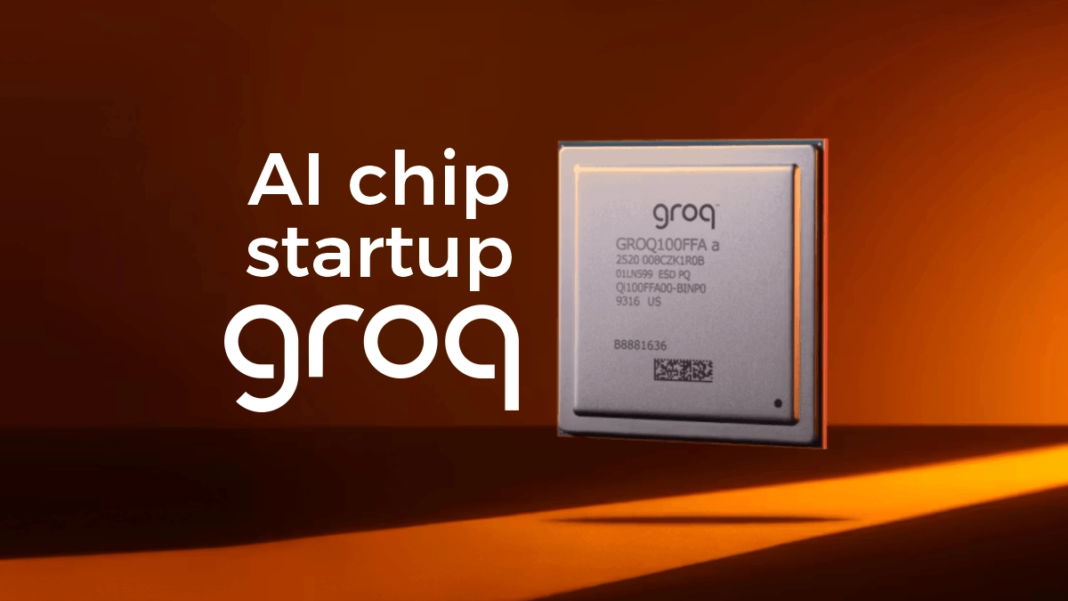

AI Chip Startup Groq: How Its LPU Tech Is Disrupting Nvidia in 2026
The AI world just witnessed its biggest architectural shift since the invention of the GPU. If 2024 was the year of “training” models, 2026 is officially the year of inference – and one name is dominating the conversation: AI chip startup Groq.
For years, Nvidia’s H100s and B200s were the only game in town. But as the industry moves from building AI to actually using it in real-time applications, Nvidia’s “Memory Wall” has become a bottleneck. Enter Groq’s Language Processing Unit (LPU), a technology so disruptive that Nvidia just spent an estimated $20 billion to bring its creators into the fold.
Is Groq the “Nvidia Killer,” or is it now the secret weapon powering Nvidia’s next generation? In this deep dive, we explore the technology, the high-stakes $20 billion talent grab, and why the Groq LPU is the most important hardware in the AI ecosystem today.
The $20 Billion “Reverse Acqui-hire”: Why Nvidia Licensed Groq
In a move that shocked Silicon Valley in late 2025, Nvidia entered into a massive non-exclusive licensing agreement with Groq. This wasn’t a standard acquisition – which would have likely been blocked by antitrust regulators – but a “backdoor” deal that effectively moved Groq’s core intelligence to Nvidia.
The Deal at a Glance
- The Price Tag: Approximately $20 billion.
- The Talent: Groq founder Jonathan Ross (the mind behind Google’s TPU) and 80% of Groq’s engineering team have joined Nvidia.
- The Structure: A non-exclusive license for Groq’s LPU IP, allowing Nvidia to integrate it into their 2026 Vera Rubin architecture.
- The Survivor: GroqCloud continues to operate as an independent entity under new CEO Simon Edwards, focusing on low-latency cloud inference.
Why Nvidia Had to Have Groq
Nvidia’s GPUs are masters of parallel processing, making them the gold standard for AI training. However, they struggle with latency in real-time inference because they rely on external High Bandwidth Memory (HBM).9 Groq’s LPU solves this “Memory Wall” by using on-chip SRAM, delivering speeds of 500–750 tokens per second – nearly 5x faster than a standard GPU setup.10
Groq LPU vs. Nvidia GPU: The Battle for Inference Dominance
The “disruption” caused by AI chip startup Groq boils down to a fundamental difference in architecture. While Nvidia’s Blackwell B200 is a powerhouse, Groq’s chip is a specialist.
| Feature | Nvidia Blackwell (B200) | Groq LPU (v2) |
| Primary Use | General Purpose / Training | Specialized LLM Inference |
| Memory Type | HBM3e (External) | SRAM (On-chip) |
| Speed (Tokens/sec) | ~100 – 150 | 500 – 750 |
| Energy Efficiency | High (for training) | 10x Better (for inference) |
| Determinism | Dynamic / Variable | Deterministic (Fixed latency) |
The Deterministic Edge
Unlike GPUs, which have variable processing times, Groq’s LPU is deterministic. This means a developer knows exactly how long a computation will take, down to the nanosecond. In 2026, this is critical for autonomous agents, high-frequency trading, and “Digital Humans” that require instant, lifelike responses.
“Groq’s LPU is essentially a high-speed conveyor belt for data, while the GPU is a massive warehouse with many forklifts. For real-time conversation, you don’t need the warehouse; you need the speed of the belt.” – AI Hardware Analyst Report, 2025.
Can You Invest in Groq? Stock and Valuation in 2026
With the “Nvidia-Groq deal” making headlines, investors are clamoring for Groq stock. However, the situation is complex.
Is Groq Public?
As of early 2026, Groq is still a private company. There has been no official IPO filing. However, the $20 billion licensing deal has skyrocketed the value of private shares.
- Secondary Markets: You can find Groq shares on platforms like Forge Global or Notice.co, where they recently traded at a 16.2% premium over their Series D-3 valuation.
- Valuation History: Groq’s last formal funding round (Series D-3 in July 2025) valued the company at $6.9 billion. The subsequent Nvidia deal effectively validates a valuation north of $20 billion.
- Major Investors: Heavy hitters like BlackRock, Samsung Catalyst Fund, and Cisco Investments are all on the cap table.
Groq vs. Grok: Clearing the Confusion
One of the most common questions in 2026 remains: Is Groq owned by Elon Musk?
The short answer is No.
- Groq (with a ‘q’): The AI chip startup founded by Jonathan Ross that makes LPU hardware.
- Grok (with a ‘k’): The AI chatbot developed by Elon Musk’s xAI.
The names are so similar that Groq actually issued a “cease and de-grok” notice to Musk in 2024.19 While Musk’s xAI uses thousands of chips to run Grok, they primarily use Nvidia H100s, though they have reportedly tested Groq chips for their superior inference speed.
The “Inference Flip” of 2026
For the first time in AI history, 2026 marks the point where inference revenue has surpassed training revenue.
Watch: How Groq’s LPU is Changing the AI Game
This video demonstrates a side-by-side speed test between a cluster of Nvidia H100s and a Groq LPU rack running Llama 3. The Groq system generates text so fast it appears instantaneous, highlighting why real-time applications are migrating to LPU architectures.
People Also Asked (FAQ)
Why does Nvidia buy Groq?
Technically, Nvidia did not “buy” the entire company to avoid antitrust issues.20 Instead, they paid $20 billion for a non-exclusive license of the LPU technology and “acqui-hired” the majority of the engineering staff.21 This allows Nvidia to solve its latency issues without the 24-month regulatory headache of a full merger.
Does Groq manufacture chips?
Groq is a fabless semiconductor company, meaning they design the chips but don’t own the factory. In 2024, Groq signed a deal with Samsung Electronics to manufacture their 4nm next-gen LPUs at Samsung’s new facility in Taylor, Texas.22
What are the best Groq models?
Groq doesn’t build its own LLMs. Instead, it provides the GroqCloud platform where developers can run open-source models like Llama 3 (Meta), Mixtral (Mistral AI), and Gemma (Google) at record-breaking speeds.23
The Future of AI Infrastructure
The rise of AI chip startup Groq proves that in 2026, raw power is no longer enough; velocity is the new currency. By successfully disrupting Nvidia’s hardware moat, Groq forced the industry giant to pivot its entire 2026 roadmap toward LPU-style architecture.
Whether you are a developer looking for sub-100ms latency on GroqCloud or an investor watching the private secondary markets, one thing is certain: the era of the general-purpose GPU is being challenged by a new generation of “Instant AI.”
Expert Takeaway: “If you are building an application that requires a human-like conversation, you cannot afford the 2-second lag of a GPU. Groq has set the new standard. Even inside Nvidia, the ‘Groq way’ is now the only way forward for inference.”