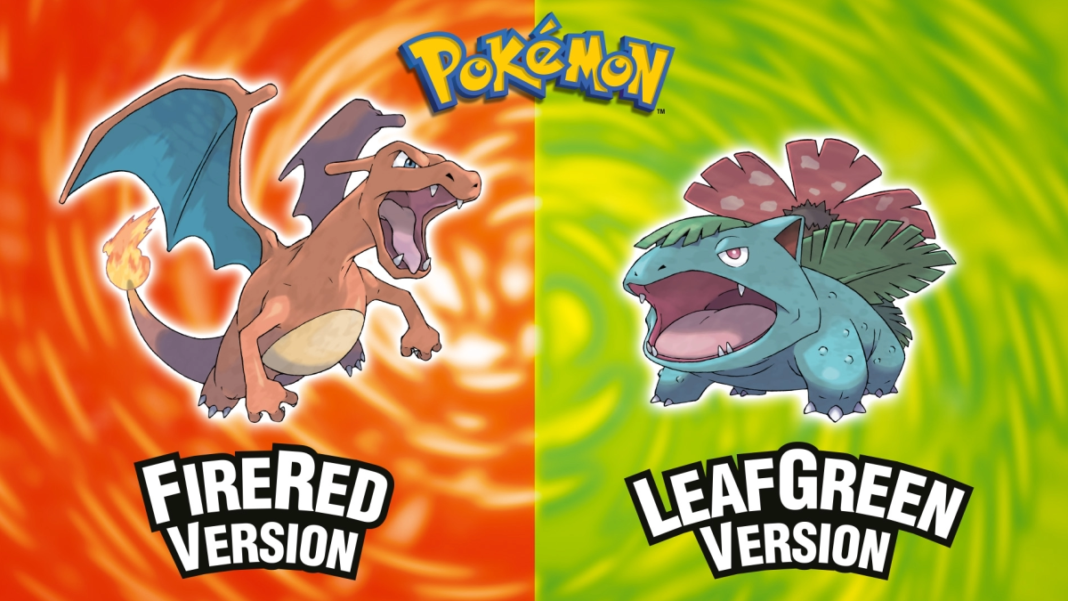

For many fans, Pokémon FireRed and LeafGreen are the definitive way to revisit Kanto-faithful to the 1996 originals yet modern enough to play smoothly today. In February 2026, Nintendo confirmed these Game Boy Advance classics are returning as standalone digital releases on Nintendo Switch (and Switch 2) on February 27-not as part of the Nintendo Switch Online (NSO) Game Boy Advance catalog. Each version costs $19.99 / £16.99, supports local wireless for trading/battling, and does not include online play. [videogames…onicle.com], [arstechnica.com], [ign.com]
That choice-selling them as separate eShop titles rather than bundling them into NSO-sparked debate. Nintendo’s official FAQ frames it as a one-off 30th anniversary celebration, pointing to these remakes as the “ultimate versions” of the original Kanto adventures and clarifying that they are not planned for the GBA–Nintendo Classics collection. [ign.com], [gonintendo.com]
The 2026 Switch releases: how they work and what’s included
Standalone, not NSO. Nintendo and The Pokémon Company will sell FireRed and LeafGreen digitally, starting February 27, 2026-immediately following a Pokémon Presents broadcast. The price is $19.99 each, and both support local wireless in the in-game Wireless Club/Union Room for trading and battling; online play isn’t supported. Early listings and coverage also noted (and then walked back) a reference to Pokémon HOME support-watch for updates from TPC/Nintendo if this changes post-launch. [videogames…onicle.com], [arstechnica.com]
Why not on NSO? Nintendo’s FAQ gives a celebratory rationale (“we thought it would be fun”), adding there’s “nothing to announce” about other classic titles joining NSO. Reporting and analysis suggest one practical reason: NSO’s save states/rewind could undermine design assumptions in Pokémon, from encounter risk to duplication exploits. [ign.com], [gamerant.com]
Preloads and parity. Preloads went live shortly after preorders, and Nintendo states the Switch versions are broadly the same contents as the 2004 releases, with modern local wireless replacing link cables. [nintendolife.com], [gonintendo.com]
A quick refresher: why FireRed/LeafGreen mattered in 2004-and still do
FireRed and LeafGreen launched in 2004 as the franchise’s first “enhanced remakes”, layering Sevii Islands and quality-of-life features onto Kanto’s original arc. Critics received them warmly (Metacritic ~81), and global sales reached ~12 million-not on the Ruby/Sapphire level, but strong for remakes. [en.wikipedia.org], [metacritic.com], [bulbapedia…garden.net]
The ESRB rates both E for Everyone, and the versions retain familiar version exclusives (e.g., Scyther/Electabuzz in FireRed vs. Pinsir/Magmar in LeafGreen), nuances that still drive trading culture today. [esrb.org], [esrb.org], [gamerant.com]
Part of the pair’s staying power comes from mechanical clarity. FireRed/LeafGreen keep Gen 1’s readable pacing while adopting Gen 3 under-the-hood balance, which many reviewers and fans still praise as a “clean” way to experience Kanto—streamlined without losing the original’s feel. [metacritic.com]
The business angle: pricing, ownership, and Nintendo’s 2025-2026 strategy
The $20 question. $19.99 per title raised eyebrows, but context helps. In the collector market, original FireRed/LeafGreen cartridges-especially boxed-frequently list from $125+ to several hundred dollars, meaning a legal digital option at $20 lands far below physical aftermarket prices. [polygon.com]
Standalone releases vs. subscriptions. Nintendo’s broader financial and investor communications highlight a strategy that blends recurring digital revenue (NSO, DLC) with evergreen software sales and selective reissues. The IR portal and independent financial trackers show a company increasingly careful about where classic content lives-sometimes inside NSO libraries, sometimes as one-off purchases that drive direct sell-through. [nintendo.co.jp], [perfectly-…ntendo.com]
Preservation tension. The 2025–2026 period has also seen heightened legal action around emulation (e.g., DMCA notices to Switch emulator repos on GitHub). While emulation can aid preservation, Nintendo’s position centers on technological protection measures and unauthorized use. FireRed/LeafGreen’s official re-release is part of the alternative, sanctioned path to classic access. [nintendolife.com], [androidauthority.com]
Design & play today: how FRLG stack up in a 2026 Pokémon ecosystem
Content fidelity over revision. Reporting indicates the 2026 editions are mostly unmodified ports with local wireless and without online battling-a philosophy of letting Kanto’s loop breathe rather than retrofitting it with modern systems. For many, that’s precisely the appeal. [arstechnica.com]
Connectivity caveats. Assuming no day-one change, online isn’t supported; trading and battling are local only. That mirrors the spirit of 2004’s Wireless Adapter experiments, even if it leaves modern matchmaking on the table. If Pokémon HOME support reappears officially, it could bridge these releases with contemporary ecosystems-but, as noted by multiple outlets, listings removed that claim ahead of launch. [arstechnica.com]
Version choices & exclusives. If you’re torn between versions, consider exclusives: FireRed leans into Scyther/Electabuzz/Arcanine; LeafGreen features Pinsir/Magmar/Starmie and others. This classic split still nudges local trading sessions-now revived via Switch’s built-in wireless. [gamerant.com]
Critical context. From a modern review lens, outlets re-evaluating these ports emphasize that “polished, not reimagined” is the point: a crisp return to a compact role-playing loop with brisk gym pacing, a rival arc that still lands, and a postgame Sevii stretch that outlives the credits. [videogamer.com]
Industry context: what FireRed/LeafGreen signal about Nintendo’s classics
A one-off-so far. Nintendo’s messaging calls these special releases to celebrate 30 years of Pokémon, not a shift in NSO policy. Still, analysts and editors note that the move “opens the door” to other classic, high-demand titles being sold outside the subscription, at least when gameplay design clashes with NSO features like rewind. [ign.com], [gamerant.com]
Why 2026? The timing aligns with Pokémon Day and a packed franchise calendar (e.g., 2025’s Pokémon Presents slate with Pokémon Legends: Z‑A and Pokémon Champions messaging). The Kanto remakes bring a proven draw to Switch and Switch 2’s user base during a generational handoff, leveraging nostalgia while avoiding the NSO feature mismatch. [pokemon.com]
The preservation drumbeat. In academia and industry circles, game preservation is a growing theme-new studies, archives, and university initiatives argue for keeping classic play accessible. Official re-releases like FRLG coexist with that push, even as emulation crackdowns stir debate about access versus rights. [news.north…astern.edu], [gamedeveloper.com]
Data & reception snapshot (quick hits)
- Launch date (Switch/NSW2): February 27, 2026; price: $19.99 each; local wireless trading/battling; no online play. [videogames…onicle.com], [arstechnica.com]
- Sales (legacy): ~12M copies lifetime across both versions (original GBA era). [bulbapedia…garden.net]
- Critical reception (legacy): Metacritic ~81 (LeafGreen). [metacritic.com]
- ESRB: E for Everyone. [esrb.org], [esrb.org]
Price psychology: $19.99 vs. the aftermarket
At $19.99, FRLG sits below the psychological $29.99/39.99 retro price bands, and far below physical aftermarket prices that regularly exceed $125. The value proposition is straightforward for anyone who’s priced authentic carts-or who wants legal, convenient access without NSO. If ownership (not subscription access) matters to you, this is the lowest-friction, lowest-cost path in 2026. [polygon.com]
This also side‑steps the availability volatility that plagues NSO libraries-players can buy once and keep. For Nintendo, it’s incremental revenue with minimal dev lift (no feature rebuilds) and no obligation to expand NSO’s GBA cadence. [nintendo.co.jp]
Player guidance: which version to buy, and who will love FRLG in 2026
Choose FireRed if you want Scyther → Scizor, Electabuzz, and Growlithe/Arcanine without trading; choose LeafGreen if you prefer Magmar, Pinsir, or Staryu/Starmie. If you’re trading locally, the “which one?” question becomes less critical-version exclusives are meant to spark trading sessions. [gamerant.com]
You’ll love FRLG in 2026 if:
- You miss Pokémon’s compact, gym‑first structure and a brisk rival arc, without open‑world sprawl. [videogamer.com]
- You value ownership over subscription access and want a legal copy untethered to NSO rotation. [nintendo.co.jp]
- You’re into local co‑play-link‑cable nostalgia reborn via local wireless on modern hardware. [gonintendo.com]
People Also Asked (and answered)
Q1: Are Pokémon FireRed and LeafGreen part of Nintendo Switch Online?
No. Nintendo is selling each as a standalone eShop title on February 27, 2026, with no NSO inclusion planned. [videogames…onicle.com], [ign.com]
Q2: Do the Switch versions support online trading or battling?
No. They support local wireless for trading/battling via the in‑game Wireless Club/Union Room; online play isn’t supported. [arstechnica.com]
Q3: Will Pokémon FireRed and LeafGreen connect to Pokémon HOME?
Coverage initially referenced upcoming HOME support, but those mentions were removed from listings; watch for official updates post‑launch. [arstechnica.com]
Q4: Which version should I buy in 2026-FireRed or LeafGreen?
Pick based on version exclusives you prefer (e.g., Scyther/Electabuzz in FireRed vs. Pinsir/Magmar/Starmie in LeafGreen). Trading locally reduces the impact of exclusives. [gamerant.com]
Q5: Why aren’t these just added to NSO’s GBA library like other classics?
Nintendo’s FAQ calls them a special 30th anniversary release and says they’re not planned for NSO. Analysts suggest NSO features like rewind/save states could clash with Pokémon’s design. [ign.com], [gamerant.com]
Conclusion: Kanto endures-because the loop still sings
Twenty years after their GBA debut, Pokémon FireRed and LeafGreen still deliver a crisp, readable RPG loop-and in 2026, that clarity feels surprisingly fresh. Nintendo’s decision to release them as standalones may be contentious, but it also signals confidence: these are evergreens, capable of holding their own without a subscription bundle. [arstechnica.com], [ign.com]
As the industry wrestles with classic access, emulation disputes, and platform economics, FRLG’s return is a reminder that good pacing and smart constraints age well. Or, as one preservation-focused academic put it in a 2025 panel about digital play: “We aren’t just preserving code; we’re preserving play styles and communities.” [manchester…centre.org]
Expert quote (games preservation, 2025):
“When we bring back classics, we’re not only archiving software-we’re restoring the social rituals around them: trading, rivalries, and the small frictions that made those moments matter.” –Dr. Jennifer Cromwell, Manchester Game Centre [manchester…centre.org]
Sources (2025-2026)
- Official/primary & industry: Nintendo IR portal; Feb 2026 financial coverage and highlights. [nintendo.co.jp], [perfectly-…ntendo.com]
- Switch releases and FAQ reporting: VGC (release timing/pricing), Ars Technica (features/pricing/online), IGN & Nintendo Life (FAQ rationale), GoNintendo (NSO clarification). [videogames…onicle.com], [arstechnica.com], [ign.com], [nintendolife.com], [gonintendo.com]
- Reviews & legacy data: Metacritic (LeafGreen 81), Bulbapedia (sales ~12M), ESRB (E ratings). [metacritic.com], [bulbapedia…garden.net], [esrb.org], [esrb.org]
- Version differences: Game Rant exclusives guide (Feb 2026). [gamerant.com]
- 2025 Pokémon Day context (Z‑A, Champions): Pokémon.com recap (Feb 27, 2025). [pokemon.com]
- Preservation discourse: Northeastern University (2025 preservation database), Game Developer coverage (VGHF & policy), Manchester Game Centre panel (2025). [news.north…astern.edu], [gamedeveloper.com], [manchester…centre.org]
- Emulation legal landscape (Feb 2026 DMCA wave): Nintendo Life, Android Authority, and VideoGamer roundups. [nintendolife.com], [androidauthority.com], [videogamer.com]